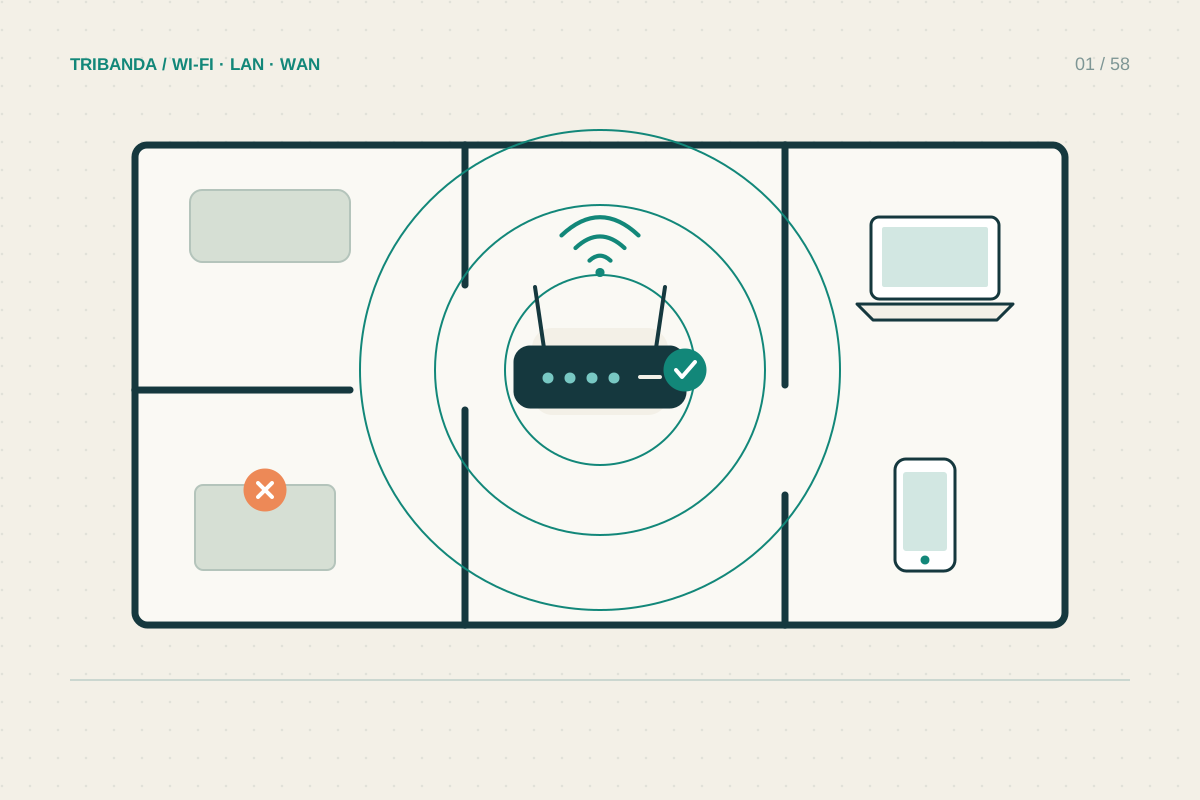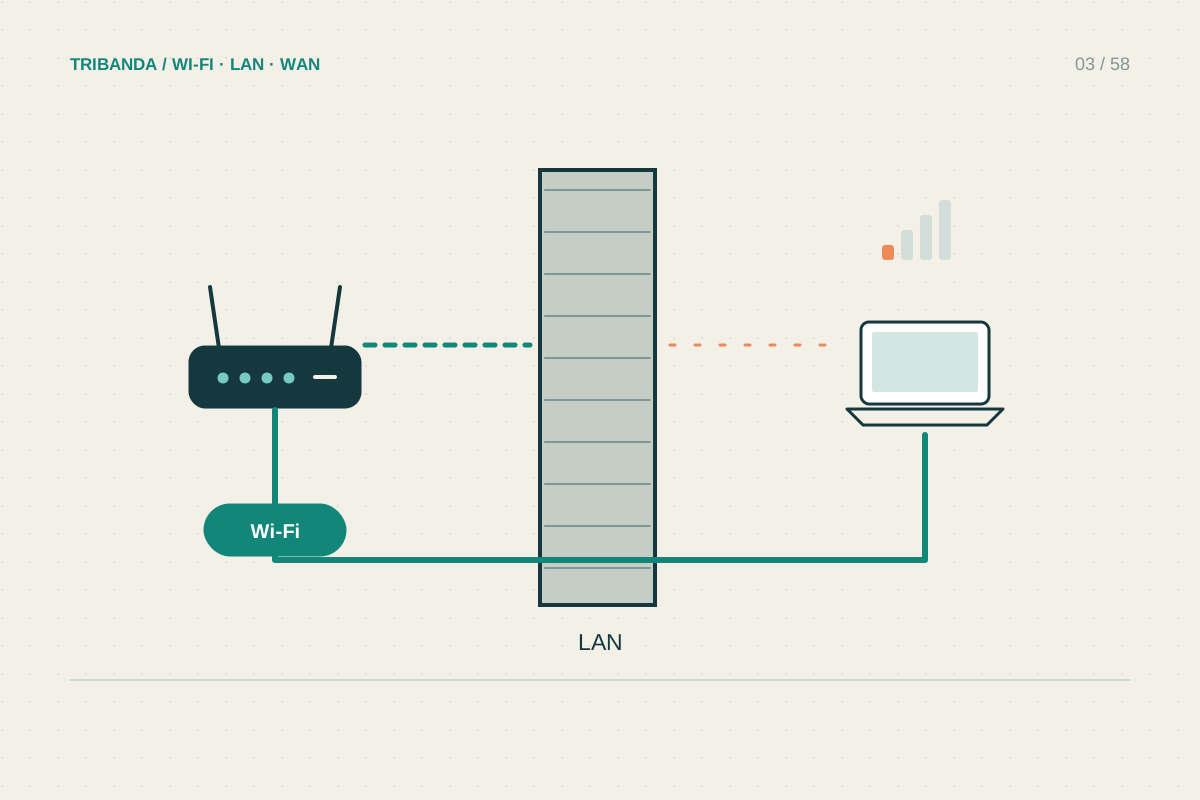
A room behind a stone or reinforced wall can remain disconnected even when the router is only a few metres away. Treat the wall as a route problem: find where the connection deteriorates, then decide whether radio should go around the barrier or a cable should cross it.
Locate the abrupt change
Walk towards the room with one phone, stopping on each side of the doorway and then at the desk. Use the same task at every point. If the connection changes sharply across one wall, record that boundary on a sketch instead of describing the whole home as slow.
Repeat with the door open and shut. Metal doors, mirrors and large furniture can add another obstacle. An improvement at the doorway suggests placing an access point along that route; it does not prove that increasing router power will reach the far side.
Try a route through open space
Repositioning the router towards an open doorway may reduce the dense material between radios. A modest shift along the same wall can be more useful than a higher shelf behind it. Check both directions: the client also needs to send data back.
If both bands are supported, compare 2.4 GHz and 5 GHz from the same position. The lower band often remains usable further away, but congestion can still make it slow. Do not judge from signal bars alone: run the application you need.
- Measure near the router to check the incoming service.
- Mark the first consistently poor point along the route.
- Test an open-door route and an alternative router position.
- Trial Ethernet to an access point before permanent installation.
Cross the barrier with a cable
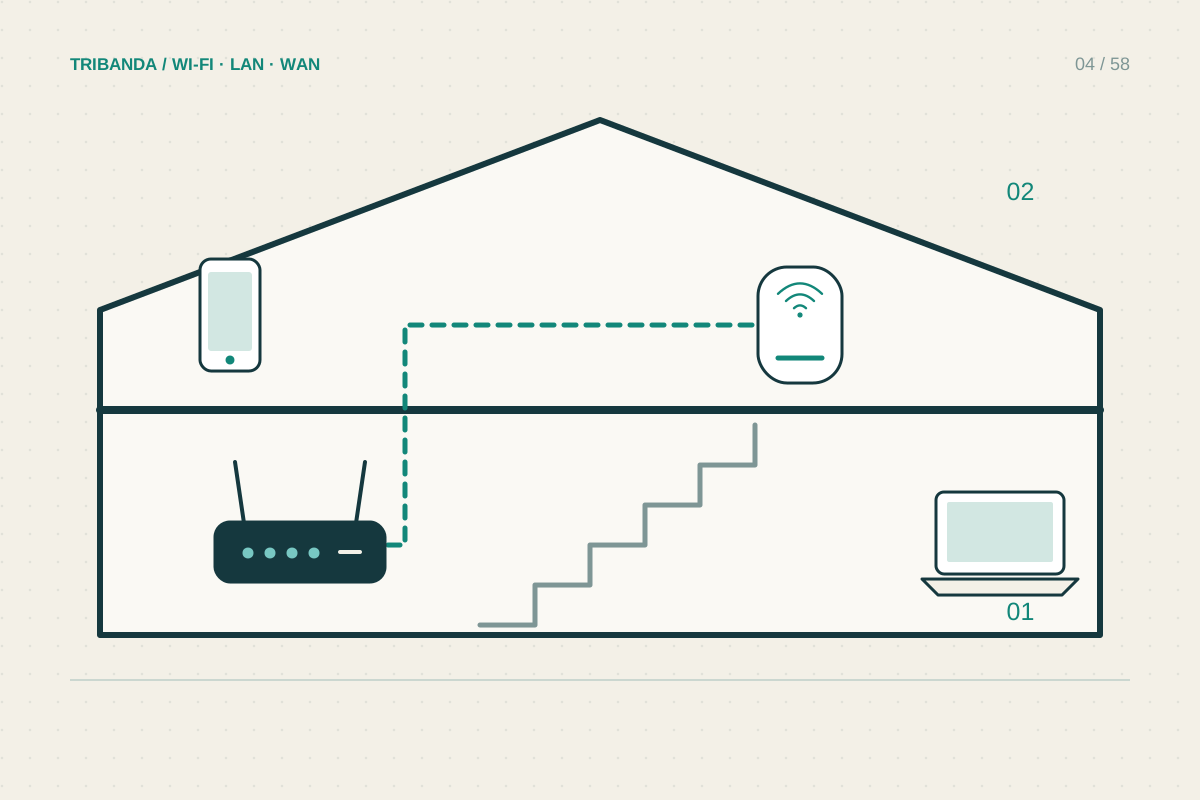
A wired access point on the far side avoids making the upstream connection penetrate the wall. A wireless mesh satellite placed deep in the weak room still faces that problem. Its local Wi-Fi bars can look excellent while its connection to the main unit struggles.
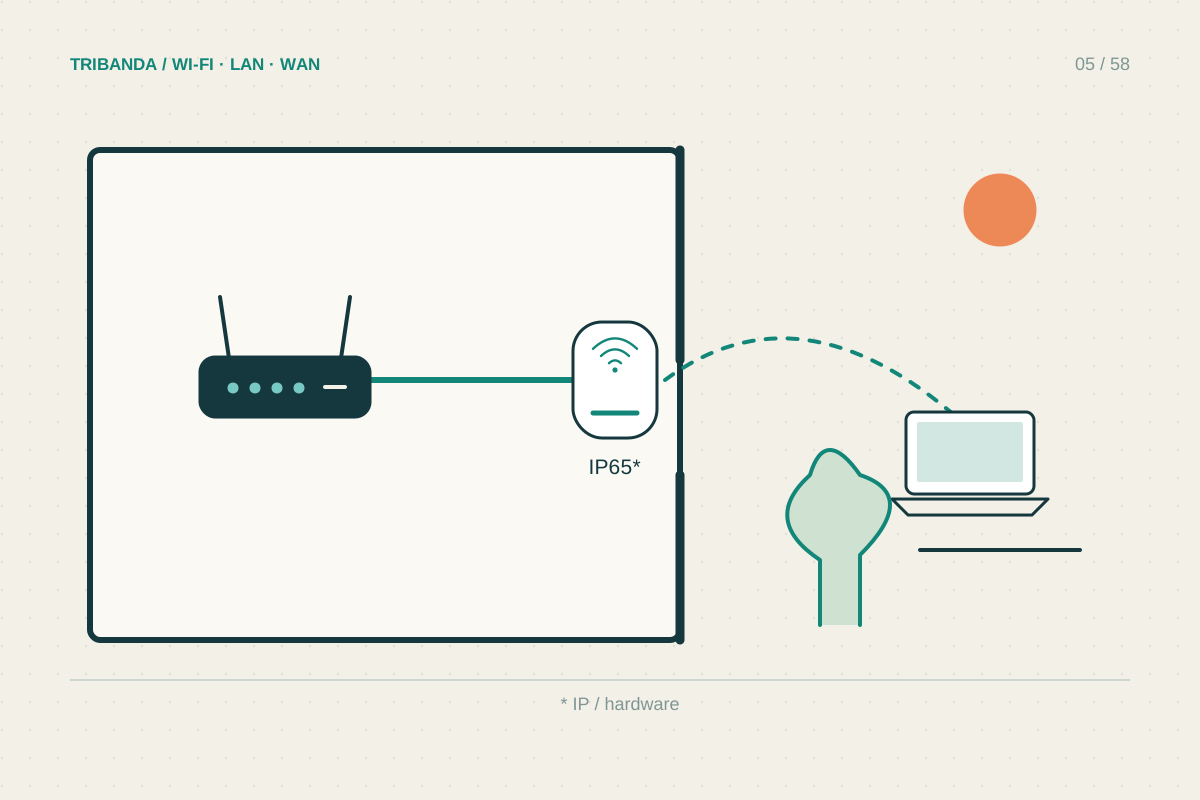
For a permanent route, check existing conduits and consult an installer where appropriate. Do not drill through unknown walls or share electrical conduits without assessment. Powerline is another trial option, but its result depends on the wiring and sockets, so it needs its own measurement.
Follow the usable route through the building. When the wall defeats the upstream radio link, a wired access point is a more direct fix.
Common questions
Will Wi-Fi 7 pass through stone better?
The generation label alone does not solve a dense barrier. Placement, band and backhaul still matter.
Should a mesh node go inside the dead zone?
Only with a usable upstream connection, such as Ethernet. A wireless node must receive a reliable signal.
Original technical illustration; schematic, not to scale.